My publicist told me that Instagram was the #1 most important social media. It has the largest user-base, and more importantly, the largest book-buying user-base. Bookstagram all the way. So, I resolved to post more often to Instagram. The first thing I did was tie my Instagram to my Facebook account, so that I could post to both simultaneously. Then I started making little images to post for my weekly blog posts. I started posting at least twice a week, when I used to only post maybe once a month, when I saw something worth a picture, and had time and inclination to post it.
Two things happened: my number of followers went up, from around 100 followers to 780 (yay) and my likes per photo plummeted, from an average of 20 to an average of 5. (BOO!)
I could only deduce that while more people were becoming aware of me as someone to entertain them, they were enjoying my content less. So, being me, I did an in-depth analysis of my last 50 posts and compared high-performing posts to low-performing posts when they fell at the same time of day and day of week.
Obviously, this is a small sample size, but I only started posting regularly this year and didn’t want to muddy the data with my old style of posting. The first trend I noted was that selfies out-performed photos without me in them, by almost double. This is not entirely surprising. I knew already from my day-job that most people are hard-wired to respond to faces; I tell all my website clients to find photos with smiling faces in them for their home page.
Photos that had gotten only one or zero likes (7 posts) were almost all photos of THINGS or EVENTS. A shot of a parade, a sketch I had drawn, a necklace I had made. In two instances, however, they were “usies” of me with a friend. Ouch. Jealous, followers?
I had started adding text to my images, since no one reads the captions on Instagram, and it seemed lots of other people were doing that, much as text on images PAINED me as a web developer. However, I found that images with text on them did not perform better than images without text, unless they also had a selfie.
However, compare these two images, which were posted both posted at 10am on a Thursday, one week apart:
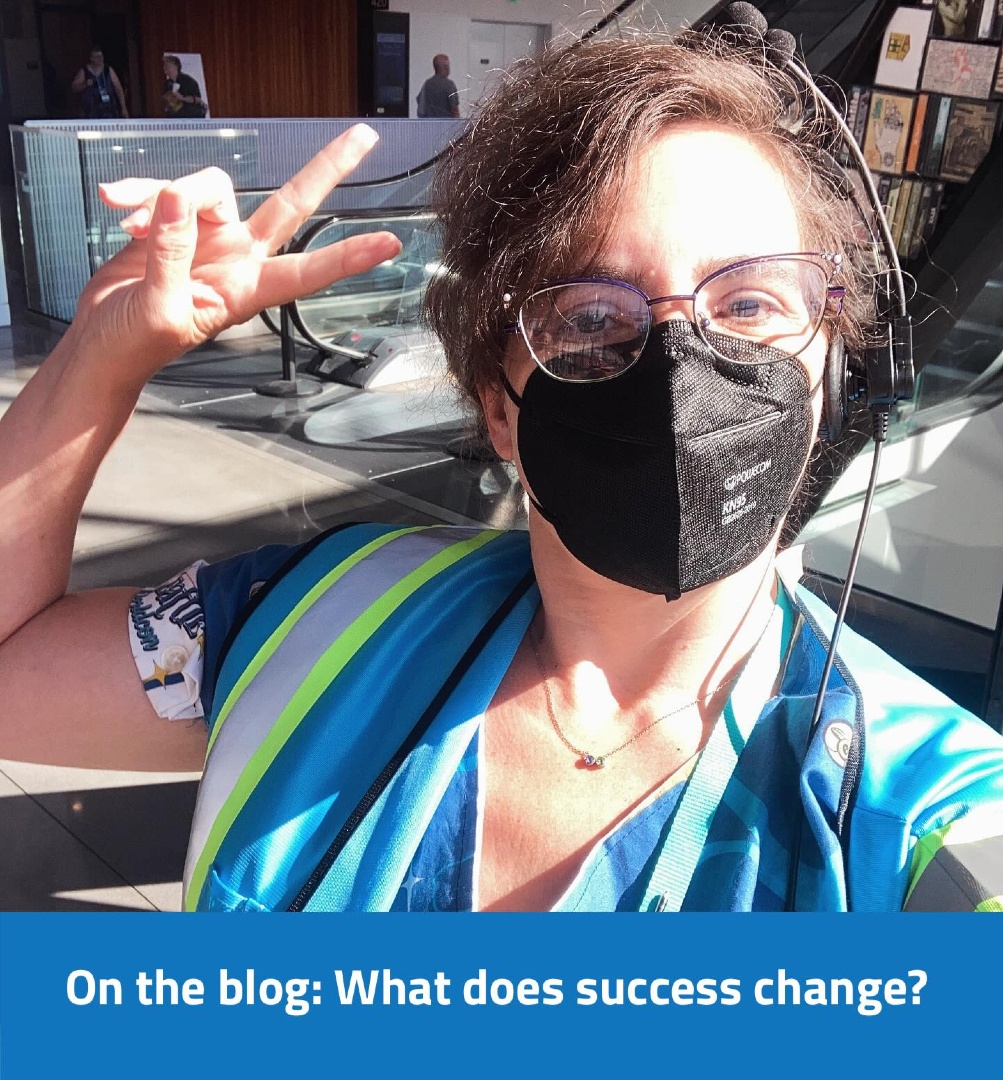
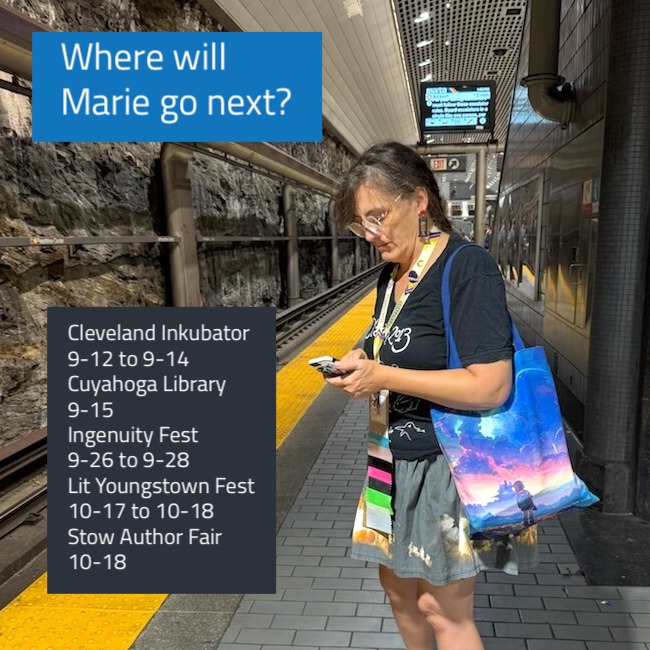
I looked just at likes on images with text and I finally found the correlation: text that was CONTENT scored consistently double text that was a call to go to my blog or buy a book or attend an event. This bore out more clearly when I separated “Content” posts from “Call to Action” posts. In fact, posts with the words “on the blog” on them consistently scored the lowest of all, with an average near 3 likes, the 7-like post was actually an outlier! Probably because it was also a selfie. If I take it out, the average drops to 2.
Posts that were straight-up promo graphics scored better than “Call to Action” posts, averaging 7 likes! Posts with “Content” were not many, I mostly had schedules for events. Posts that had my schedule for an event averaged 11 likes, whereas posts that had selfies but only said “See me at [event] on [date]” averaged 4 likes. Eleven likes is still lower than I’d like (ha) but it’s over double the engagement of “Call to Action” for the same type of information (Come to see me at this event.)
Conclusion: I am going to stop putting “On the blog” or “See me at” captions on my Instagram posts. The “calls to action” are not working on that platform. I will only put text on images when I have actual content/information to share that will fit on an instagram post.
Honestly, I prefer that.
I also saw that, allowing for type of post, posts made after 11am did better than those posted earlier, which I did not prefer. I like to schedule my social media posts for first thing in the morning! It used to be the preferred time for the-site-formally-known-as-twitter. But perhaps, while people surf their text-based socials as they take their morning caffeine, they are more likely to check out their photo-feeds at lunch.
I’ll report back when I’ve data on how these changes work out! I figure I need at least ten posts to see if there’s an improvement, and that’ll take, well, at least 5 weeks.